Amazon Product Research: Validate Demand, Competition, and Profit Before You Launch
Amazon product research should not start with excitement. It should start with proof. A product can look attractive because competitors are selling well, but that does not mean a new seller can enter profitably after FBA fees, advertising, returns, packaging, and inventory risk.
This checklist is built from practical seller materials around product research sheets, competitor analysis, profit calculators, product launch plans, and inventory planning. Use it before placing a purchase order, not after inventory is already on the water.
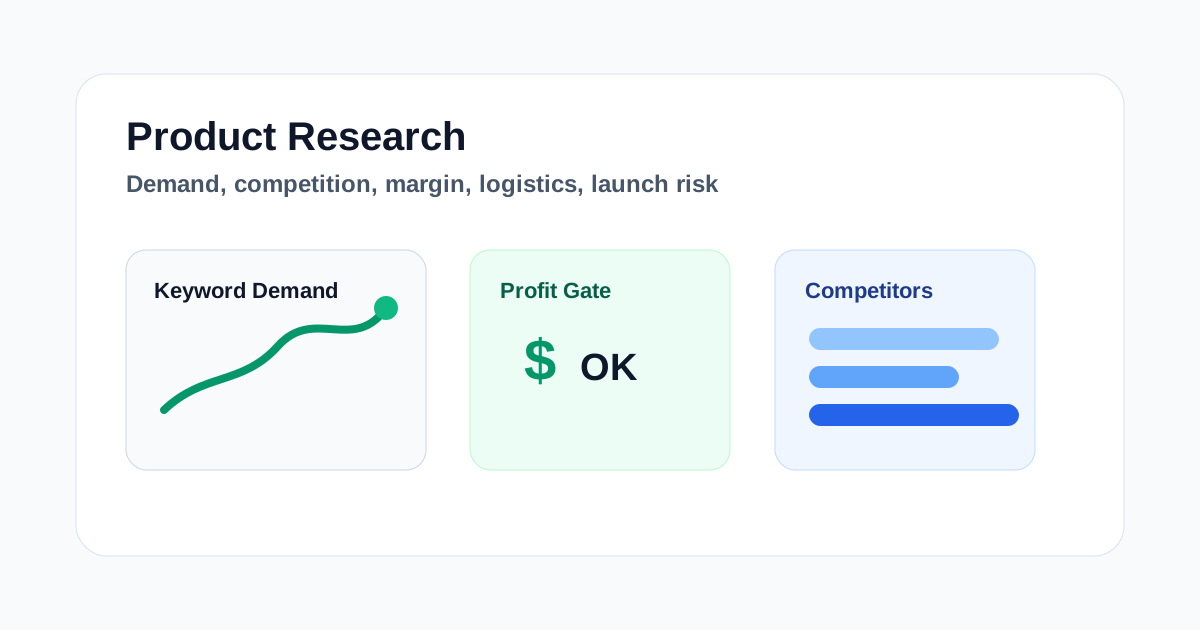
Start With Demand, Not Product Taste
A good product idea needs measurable demand. Look for:
- keywords with consistent search volume
- multiple competitors selling, not only one outlier
- stable demand across recent months
- room for different price points
- buyer intent that matches your product angle
Avoid judging demand from one bestseller alone. One strong listing may be supported by brand traffic, old reviews, external traffic, or a temporary promotion.
Read the Competitive Landscape
Competitor research should answer a simple question: why would a shopper choose your offer instead of existing listings?
Check:
| Area | What to Look For |
|---|---|
| Reviews | Are top competitors protected by thousands of reviews? |
| Price | Is there enough margin after matching the market price? |
| Images | Can you create clearer product visuals? |
| Bundle | Can you solve a missing accessory or use case? |
| Listing copy | Are competitors weak on benefits, sizing, or comparison? |
| Brand moat | Is the market dominated by recognizable brands? |
If the only plan is to sell the same item cheaper, the product is fragile. Price competition can erase margin quickly.
Validate Profit Before Launch
Profit validation should include more than unit cost. Build a simple model with:
- landed product cost
- Amazon referral fee
- FBA fulfillment fee
- inbound shipping
- packaging and inspection
- coupon or launch discount
- expected PPC cost
- return allowance
- storage and removal risk
Then calculate the break-even price and break-even ACOS. If the product only works with perfect advertising and zero returns, it is not a durable opportunity.
Check Logistics and Compliance Early
Many product ideas fail outside the keyword sheet. Before launch, check whether the product has:
- size or weight penalties
- battery, liquid, food, child, medical, or restricted-category issues
- labeling requirements
- fragile packaging risk
- seasonal inventory risk
- high return probability
A product can have healthy demand and still be a poor operational fit. Logistics and compliance are part of product research.
Build a Launch Assumption Sheet
Before buying inventory, write down assumptions:
- Target selling price.
- Expected gross margin.
- First 30-day ad budget.
- Target keywords.
- Main competitors.
- First order quantity.
- Reorder trigger.
- Differentiation angle.
This turns product research into a decision, not a feeling. After launch, compare actual results against the assumptions.
FAQ
What is the most important Amazon product research metric?
No single metric is enough. Demand, competition, margin, logistics, and launch cost need to be reviewed together.
How many competitors should I analyze?
Review at least the top 10 organic listings and the main sponsored listings for your target keywords. More competitive categories may require deeper analysis.
Should new sellers avoid highly competitive products?
Not always, but they need a clear angle: better bundle, stronger visuals, sharper positioning, operational advantage, or access to a better supply chain.
Why calculate break-even ACOS before launch?
Break-even ACOS tells you how much advertising pressure the product can survive. Without it, PPC decisions become guesswork.
When should I reject a product idea?
Reject it when demand is weak, reviews are impossible to overcome, margin disappears after real costs, compliance is uncertain, or inventory risk is too high.